Jan 28, 2026
Both StackAI and Workato enable organizations to build AI-powered workflows and agents. Both are serious enterprise platforms. The real question isn't which has more features—it's which platform enables your organization to deploy AI in production and scale quickly. That depends entirely on how you answer three questions:
Who Will Build Your AI Systems?
Who builds AI agents — specialized technical teams or the teams who use them every day?
Can Your AI Just Execute — or Can It Reason?
Execution delivers early wins, and many organizations plateau here; reasoning unlocks long-term value.
How Often Will Your AI Need to Change?
Most AI platforms quietly break here — as AI moves from pilot to production and change becomes constant.
Before diving into these questions, it's worth understanding where each platform comes from.
Platform Architectures: Different Starting Points
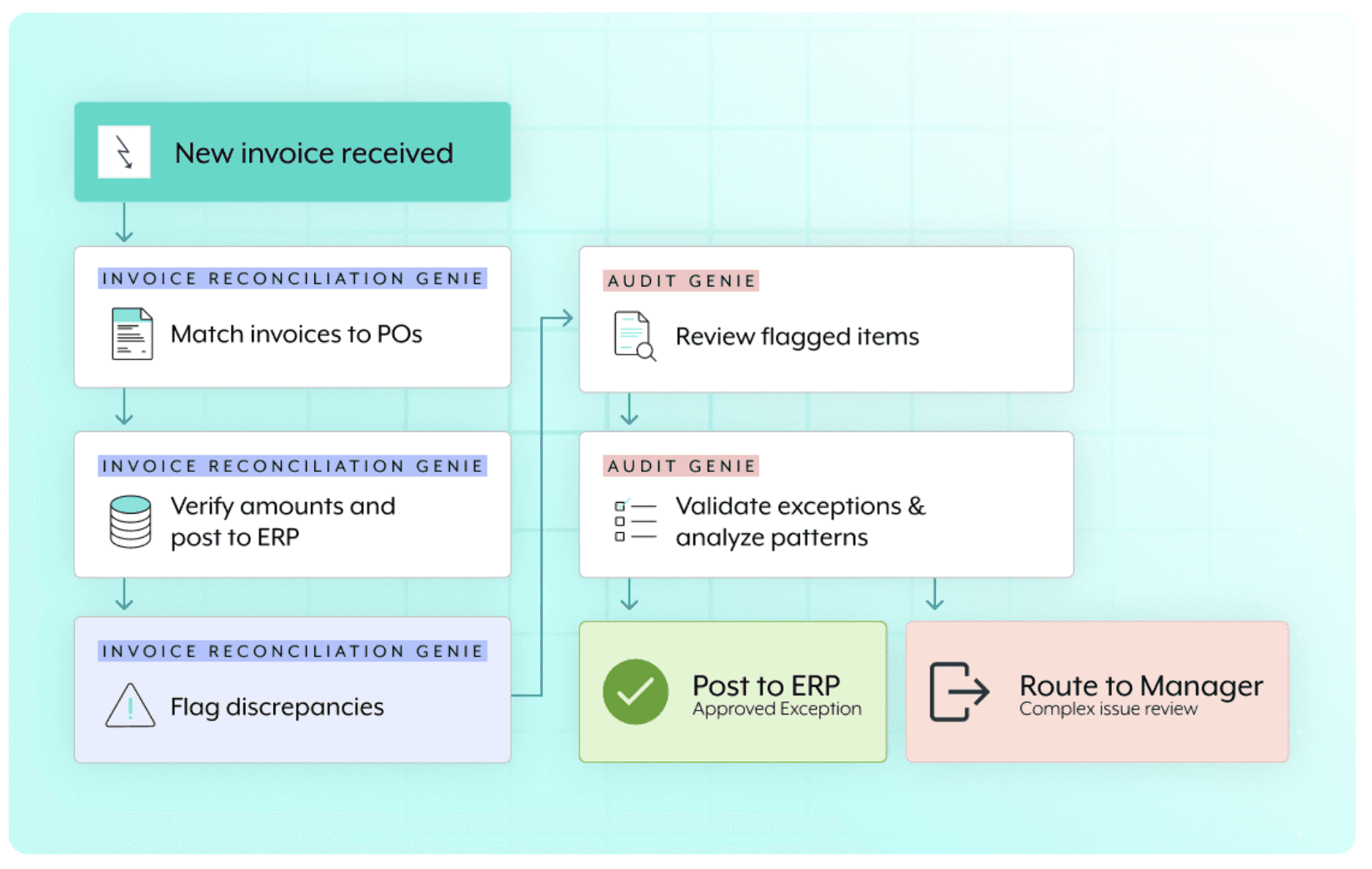
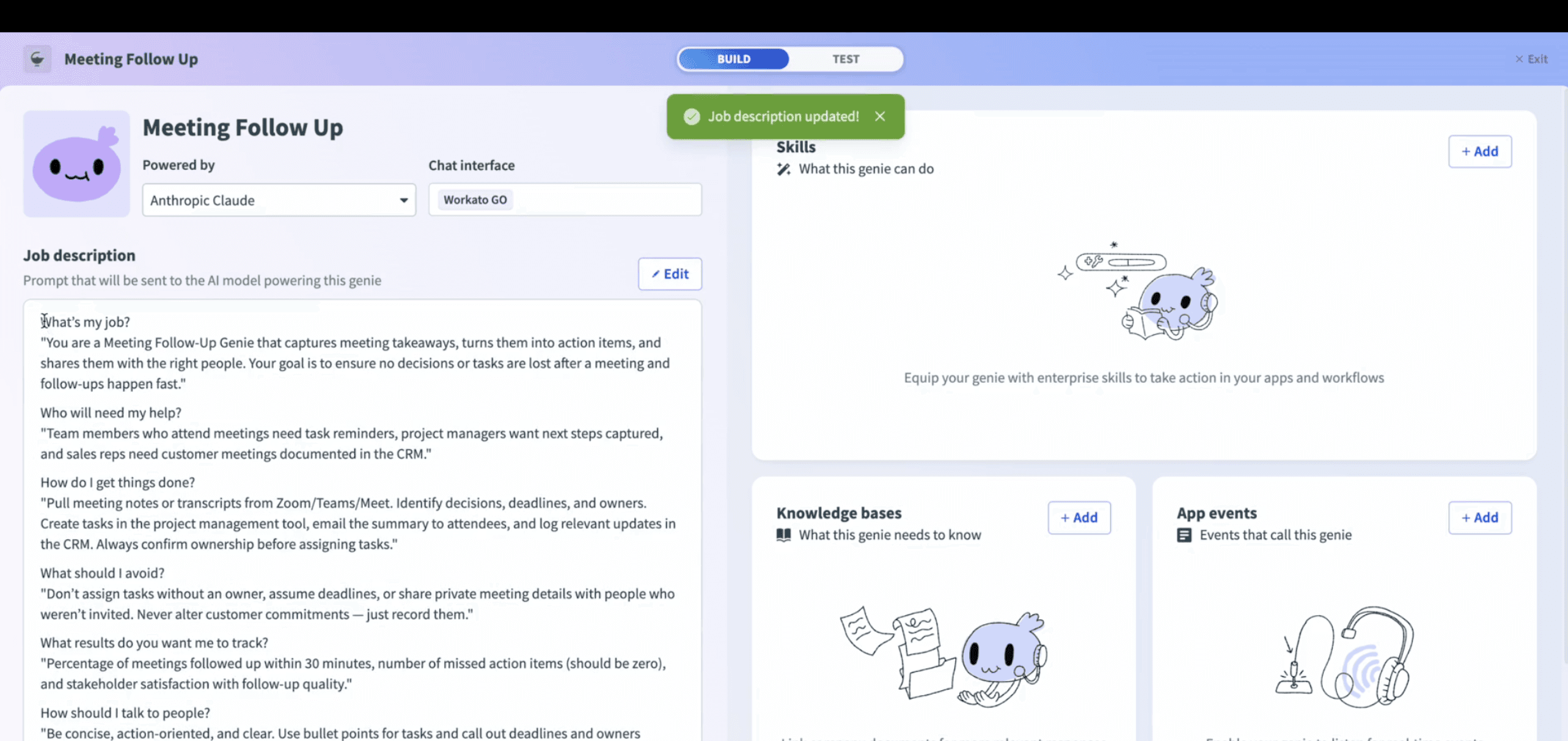
Workato grew out of enterprise integration and process automation. It’s optimized for reliability, governance, and connecting systems of record. AI agents extend this foundation by adding decision-making on top of structured workflows.
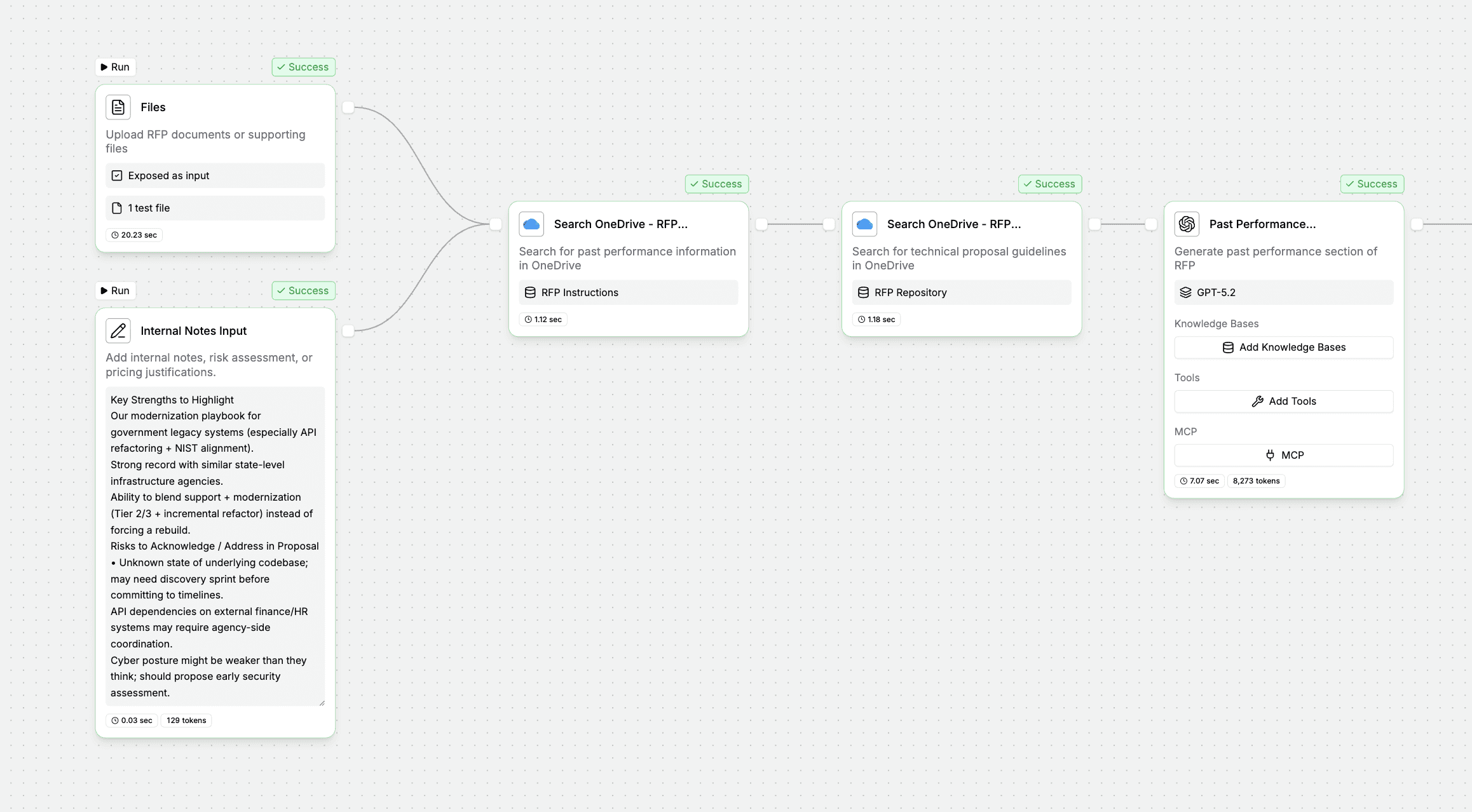
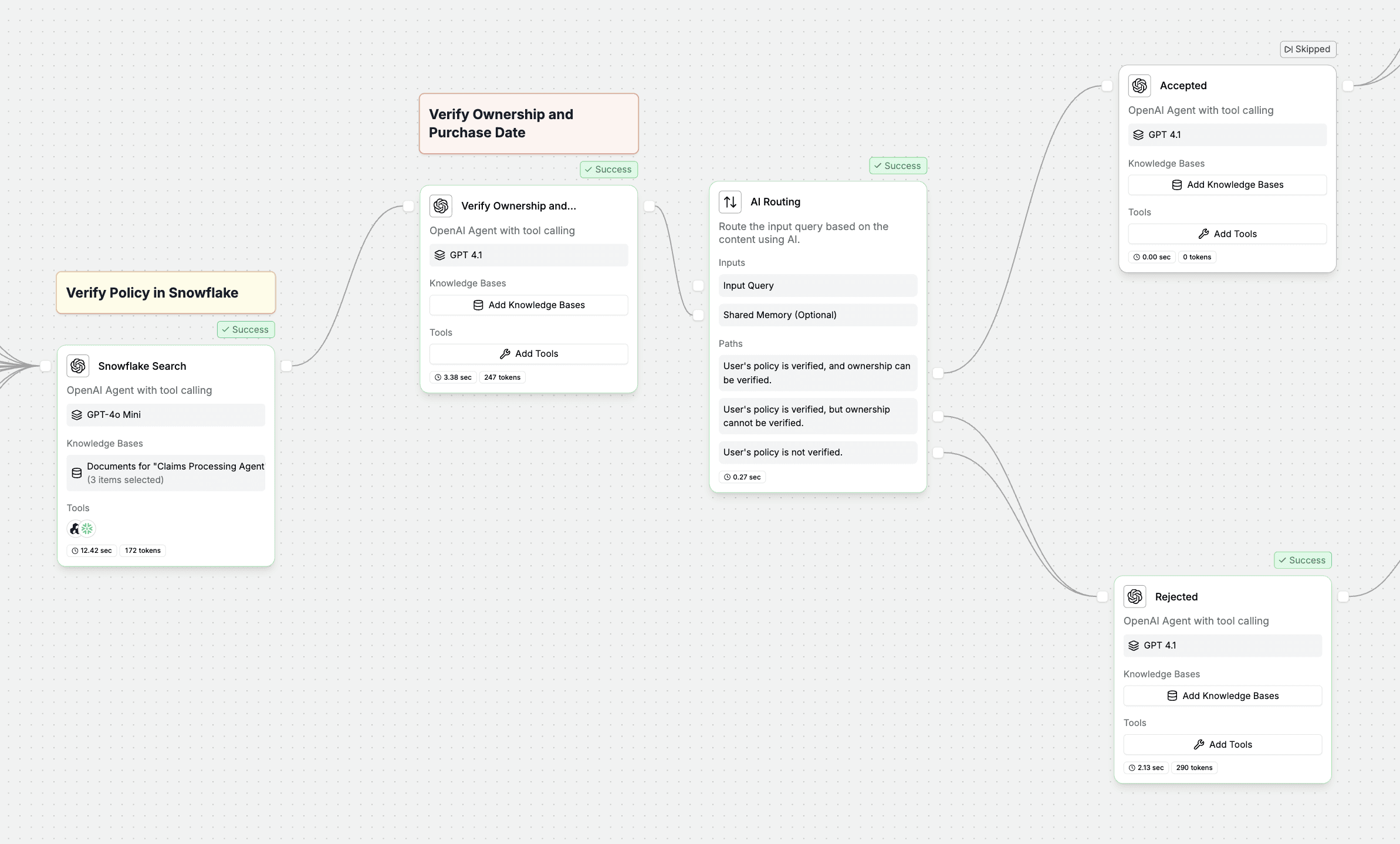
StackAI started from a different assumption: AI workflows are probabilistic, knowledge-driven, and constantly evolving. The platform is built around orchestrating reasoning, not just executing processes.
With this context in mind, let's explore the three questions that will help you determine which platform aligns with your organization's needs.
1. Who Will Build Your AI Systems?
Most AI initiatives fail not because of technology—they fail because of adoption. The people who understand the problems can't build the solutions, and by the time IT delivers, requirements have shifted or the business opportunity has passed.
For organizations aiming to deploy AI across thousands of employees, this is a critical bottleneck. You can't hire enough AI engineers to build for every team, and you can't centralize all AI development without creating massive queues and losing organizational knowledge.
StackAI breaks this pattern as a no-code, visual builder designed for business users
Support, operations, product, sales, and HR teams build their own AI workflows
Prompt editing and logic changes require zero coding
Deployment happens in minutes, not months
This directly solves enterprise AI's two biggest challenges:
Adoption: When non-technical teams can build safely, AI spreads organically. Instead of 5 IT-built agents serving the whole company, you get 500 team-built agents solving function-specific problems.
Strategy: You don't need to predict which AI use cases will deliver ROI—teams discover value by building and iterating in days, not planning in isolation for months.
For a 10,000-person organization, this is the difference between AI as an IT project and AI as an organization-wide capability.
Verdict:
Choose Workato if you would like AI to remain tightly controlled by technical teams.
Choose StackAI if you want AI to scale across your organization and empower business users to own their AI agents.
2. What Problems Are You Solving?
It’s both common and recommended to start an AI roadmap with execution-first workflows.
Calling a model to classify, route, score, or trigger the next step in a process delivers fast wins and builds confidence. Many organizations — and many StackAI customers — begin here.
The challenge is what happens next.
As AI adoption scales, the workflows that deliver the most value increasingly require reasoning:
Interpreting policies, contracts, or documentation
Synthesizing signals across systems
Handling edge cases and ambiguity
Adapting as context and inputs change in production
This is where many organizations plateau. Not because AI can’t do more — but because the platform was never designed for it.
Execution-first workflows are the right place to start.
Reasoning-first workflows are what ultimately differentiate AI at scale.
Verdict:
If your AI just needs to execute, choose Workato.
If your AI needs to decide — not just execute — choose StackAI.
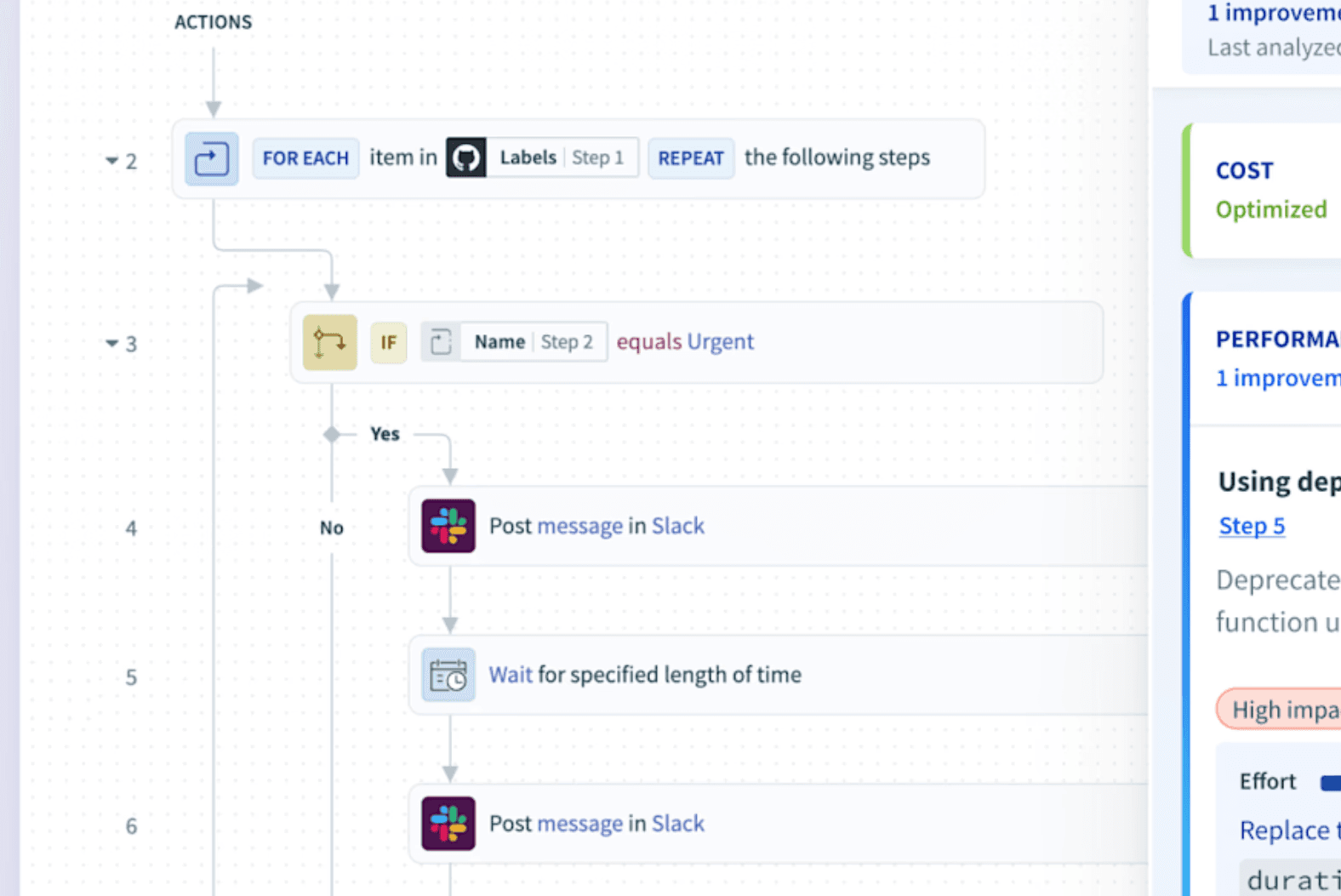
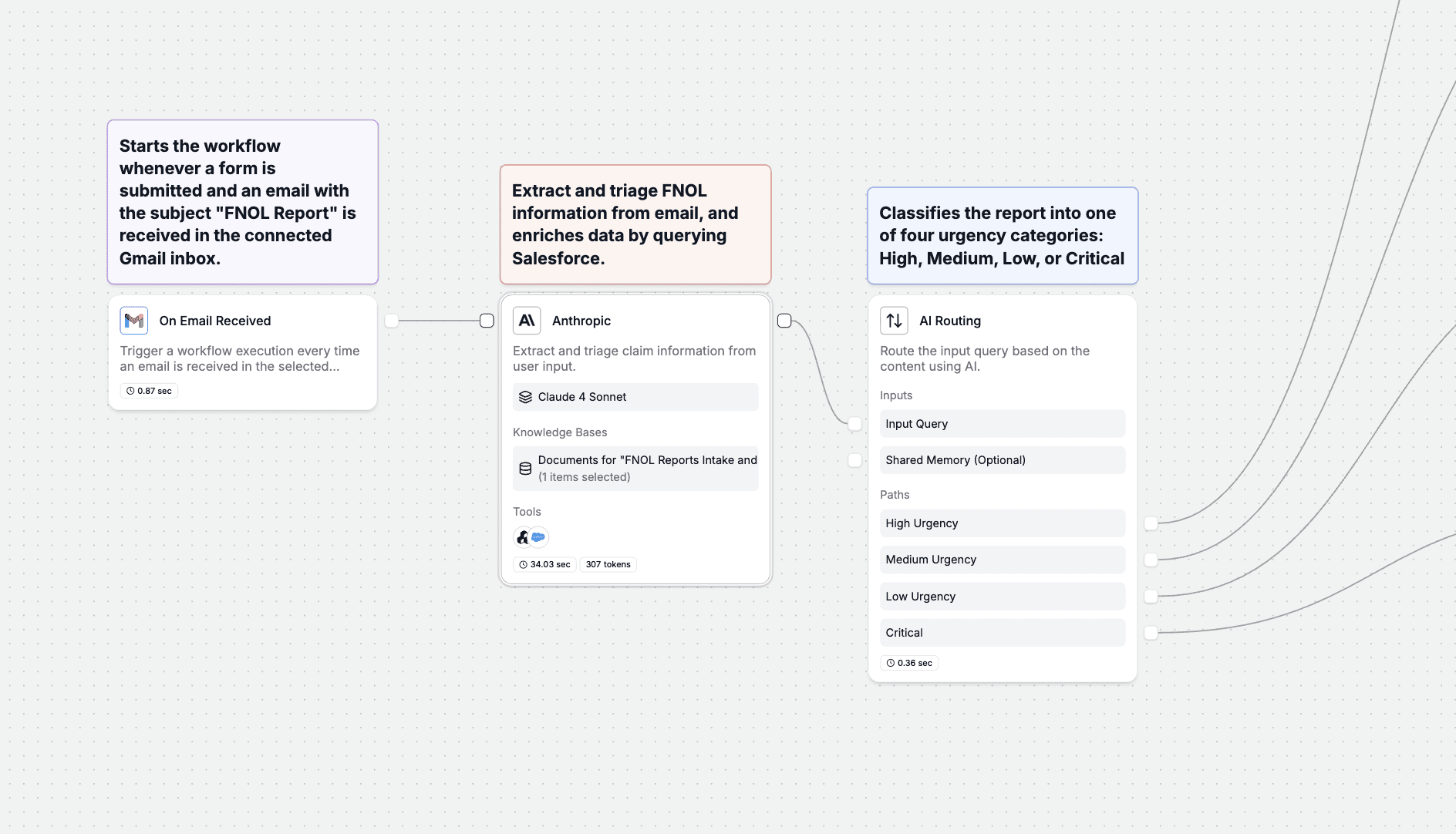
Workato is a solid choice for process automation, as shown above, but when agent logic transcends step-by-step decision making into more advanced reasoning situations, StackAI is a better fit.
3. How Often Will Your AI Need to Change?
AI systems rarely fail in demos. They fail in production.
Once AI is live, everything changes:
New models appear and outperform the last
Costs, latency, and capabilities shift
Agents become more autonomous
Real users surface edge cases immediately
At that point, success depends on two things: the platform’s ability to evolve and who is empowered to make changes.
Platforms built around static workflows slow down under this pressure. To protect stability, teams centralize changes, limit scope, and keep AI simple — even when more value is possible.
StackAI is designed for production reality:
Rapid access to the latest models and capabilities
Support for increasingly autonomous agents
Continuous evolution without rebuilding workflows
Business teams can refine behavior as systems change
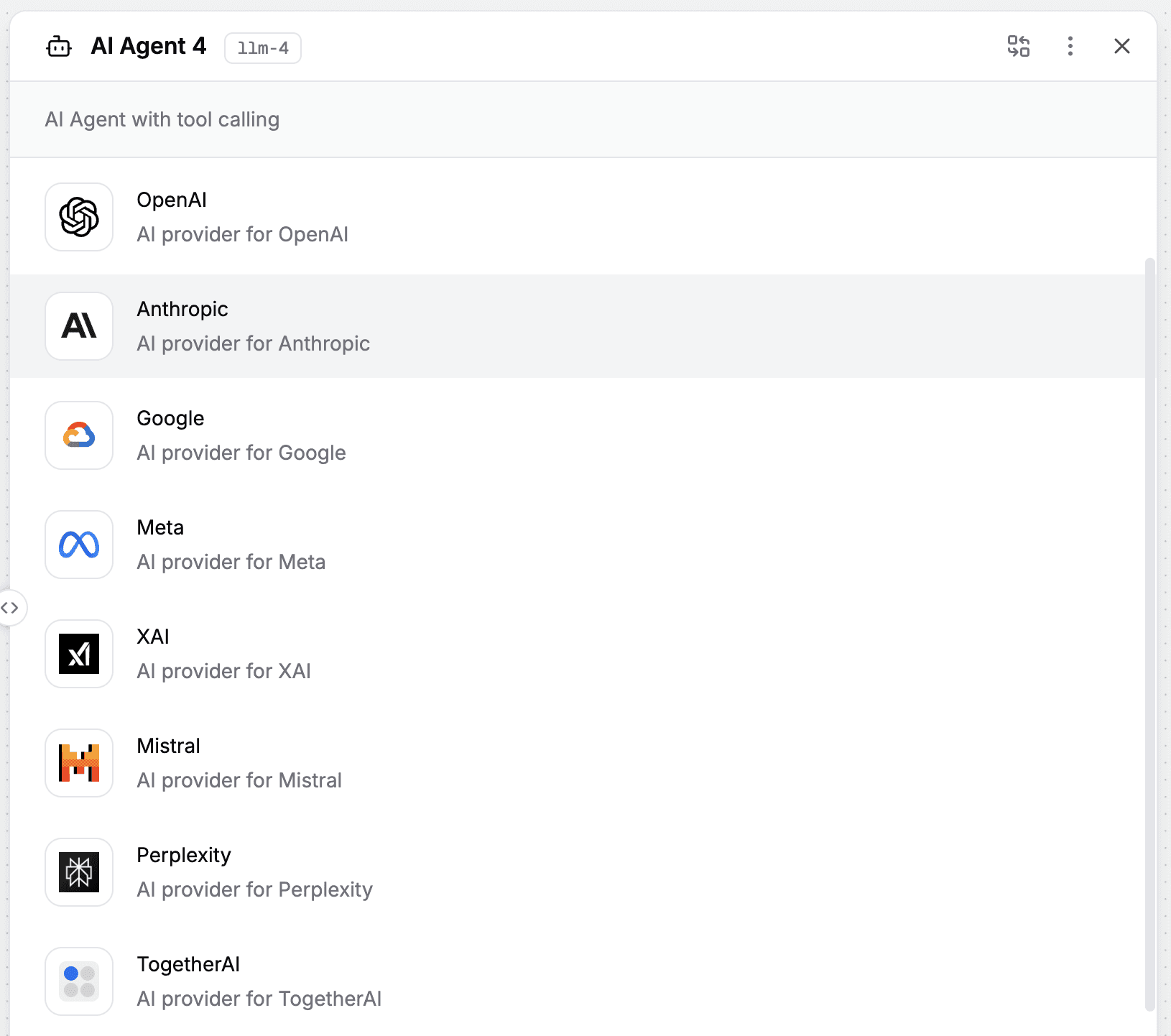
This combination is critical:
Without platform flexibility, systems break.
Without user empowerment, organizations stall.
If your AI needs to keep improving after launch, not just survive it, StackAI fits naturally.
Verdict:
If your AI needs to evolve weekly — or daily, choose StackAI.
If your AI changes rarely and predictably, choose Workato.
When to Use Both Platforms
Some AI organizations use both platforms strategically:
StackAI for knowledge-intensive agents, rapid experimentation, and broad organizational deployment
Workato for mission-critical process automation and governed system-of-record integration
The platforms can complement each other—StackAI agents can trigger Workato workflows when actions need audit trails, and Workato automations can invoke StackAI agents when deep reasoning is required.
This hybrid approach lets you:
Move fast where speed matters (StackAI)
Move carefully where stakes are high (Workato)
Scale AI coverage without sacrificing governance
Final Perspective
Automation-first platforms were built for a world where workflows were stable, logic was deterministic, and change was rare. AI has fundamentally changed that equation.
Simple automations are a great place to start — but they should be the beginning, not the ceiling.
StackAI is built for how AI actually succeeds at scale:
Empowering business users, not just technical teams
Systems that survive contact with production reality
AI that evolves continuously instead of breaking quietly
Roadmaps that move beyond execution into real intelligence
Workato extends automation with AI. StackAI enables organizations to grow past automation into true AI capability.
That difference compounds over time — and determines whether AI remains a pilot or becomes a core organizational advantage. Want to learn more? Get a demo of custom use cases here.

Marta Llopis
AI Strategist at StackAI